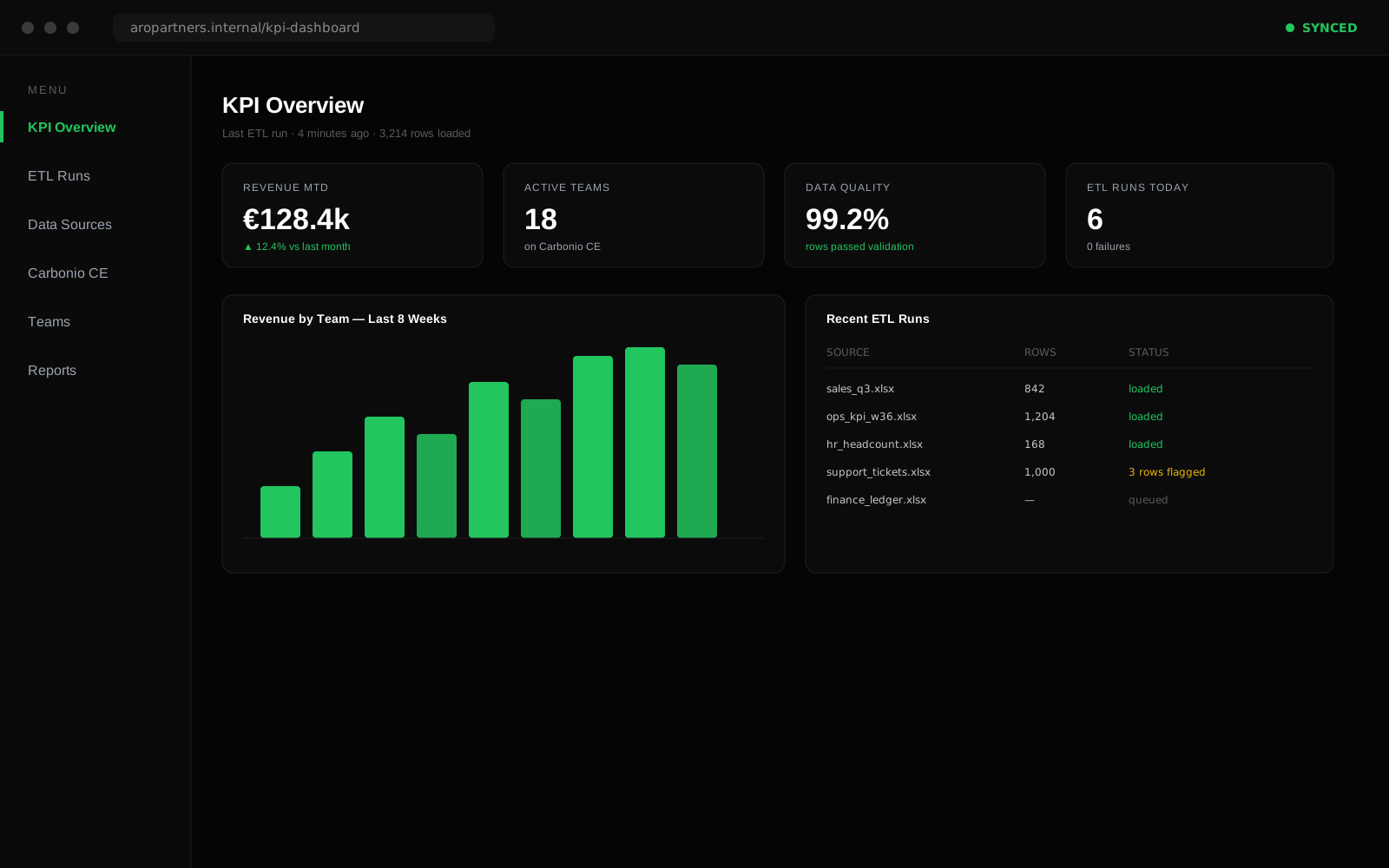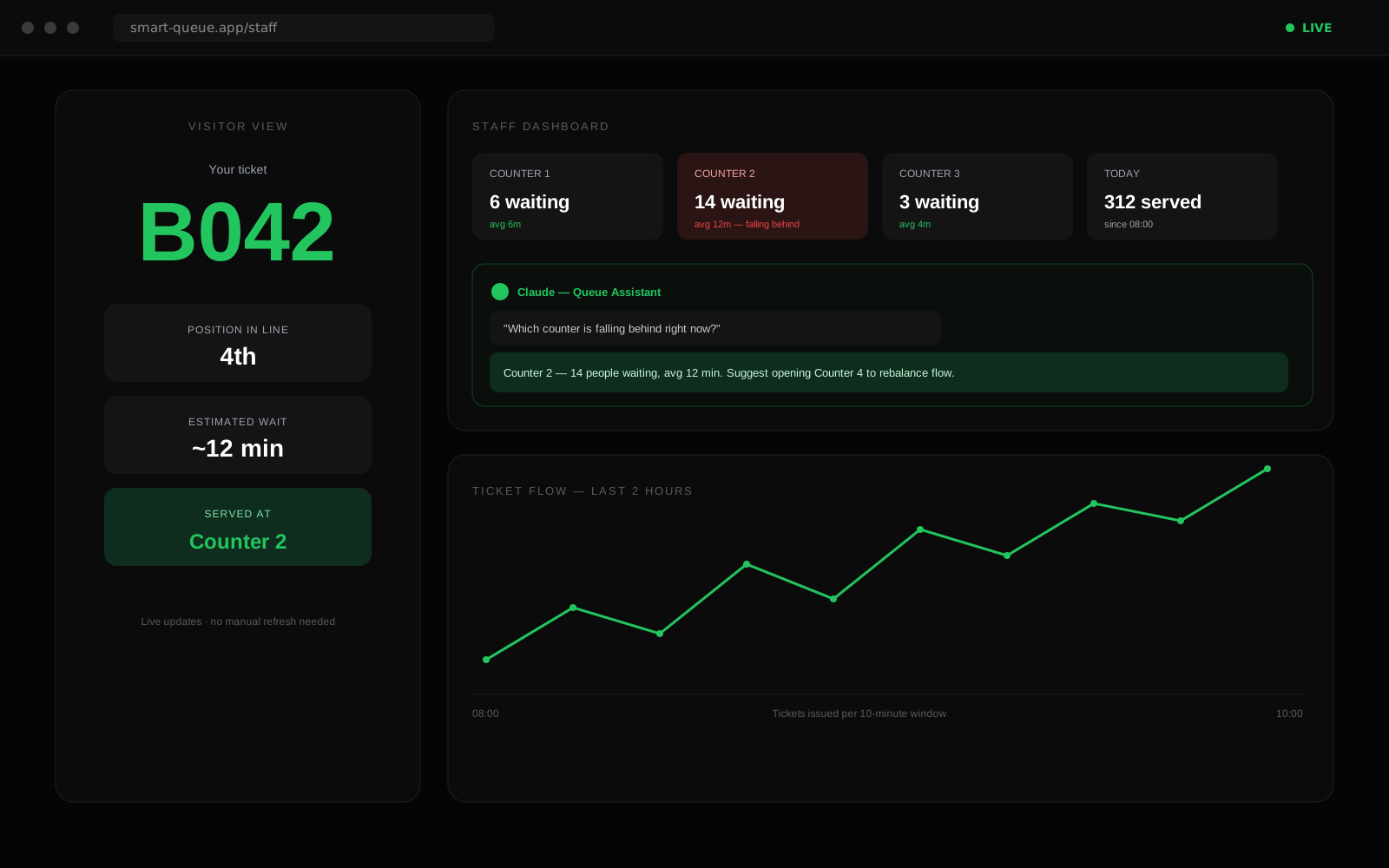
SmartNet Guard — Network Supervision & DevSecOps
- Category
- Network Supervision & DevSecOps
- Year
- 2025
- Role
- DevSecOps & Automation Specialist — AROPARTNERS
- Context
- AROPARTNERS — internal infrastructure supervision system
Tools & Technologies
Approach & Engineering
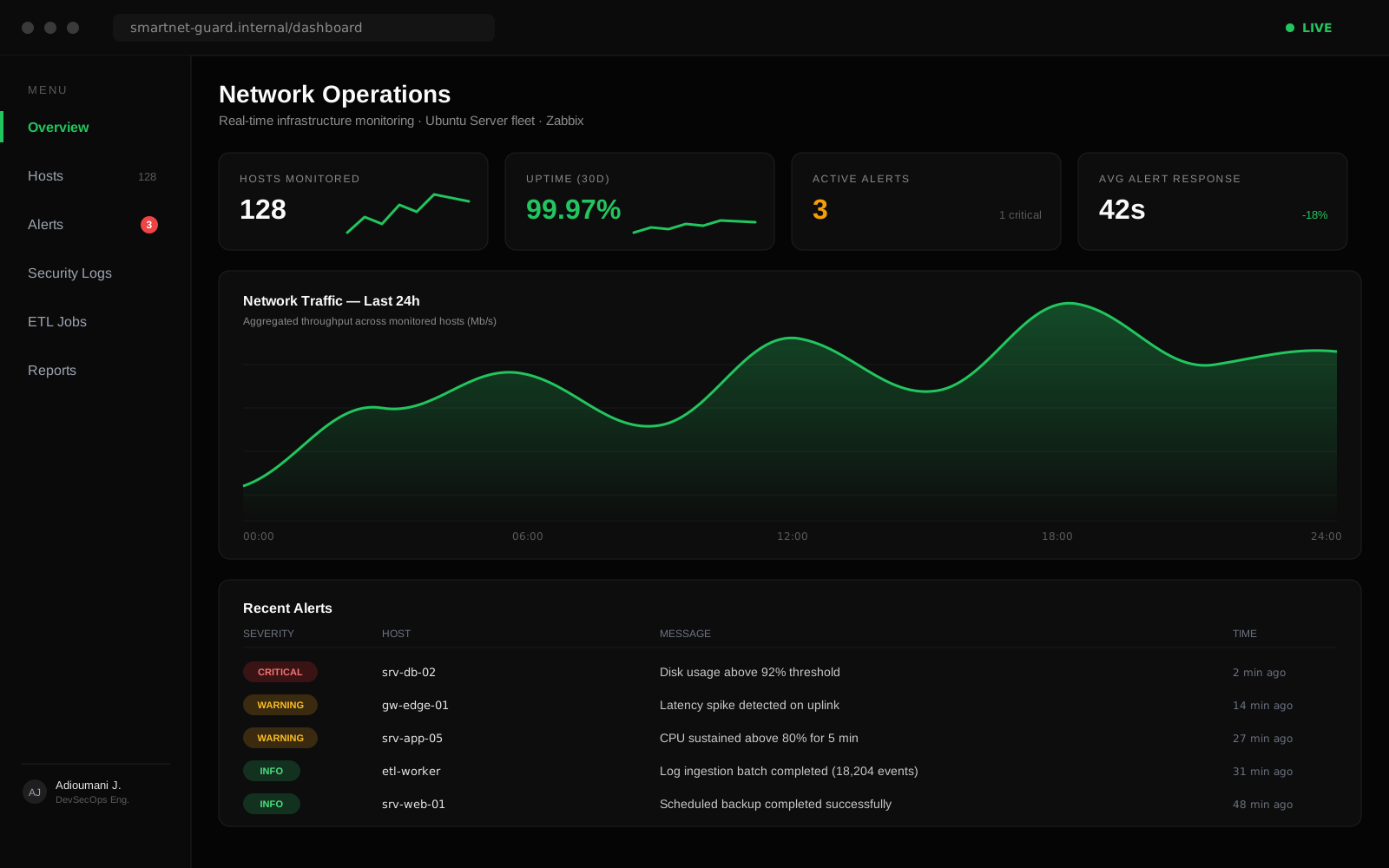
I designed and deployed a centralized network supervision system on virtualized Ubuntu servers, using Zabbix as the monitoring core. On top of it, I built automated Python ETL pipelines that continuously ingest and normalize security logs from across the infrastructure, and a secure, responsive React dashboard so operators can visualize alerts and host health in real time rather than digging through raw logs.
Vision and Impact
Infrastructure incidents are only actionable if they are visible before they become outages. My goal was to give the operations team a single, real-time source of truth for network and host health — closing the gap between "something happened" and "someone can act on it" from hours down to seconds.
Key Technical Challenges
Zabbix produces high-volume, semi-structured event data that is not directly consumable by a dashboard or by an analyst under time pressure. The core challenge was designing a Python ETL layer that could reliably parse, deduplicate and classify security logs at scale, persist them into PostgreSQL with a schema that supports fast queries, and keep the pipeline resilient to malformed or delayed data without losing alerts.
Solving Complex Problems
Beyond the pipeline itself, I had to harden the whole stack: securing communication between the Zabbix agents, the ETL layer and the dashboard; managing service accounts and access scopes on the Ubuntu servers; and making sure the React dashboard authenticated safely and stayed responsive even under a burst of simultaneous alerts.
User-Centric Design
The dashboard was built for network operators under pressure, not for a general audience. Severity is color-coded, the most critical alerts surface first, and every view is responsive so the system stays usable whether an operator is at a workstation or checking status from a phone during an on-call incident.
Meeting Stakeholder Needs
The operations team needed three things above all: real-time visibility, alert triage that does not require reading raw logs, and confidence that the monitoring layer itself would not become a blind spot. SmartNet Guard delivers a live host inventory, an alert feed prioritized by severity, and audit-friendly logging of every automated ETL run.